By ADAM KIRSCH
AYN RAND AND THE WORLD SHE MADE
By Anne C. Heller
Illustrated. 567 pp. Nan A. Talese/Doubleday. $35
A specter is haunting the Republican Party — the specter of John Galt. In Ayn Rand’s libertarian epic “Atlas Shrugged,” Galt, an inventor disgusted by creeping American collectivism, leads the country’s capitalists on a retributive strike. “We have granted you everything you demanded of us, we who had always been the givers, but have only now understood it,” Galt lectures the “looters” and “moochers” who make up the populace. “We have no demands to present you, no terms to bargain about, no compromise to reach. You have nothing to offer us. We do not need you.”
“Atlas Shrugged” was published 52 years ago, but in the Obama era, Rand’s angry message is more resonant than ever before. Sales of the book have reportedly spiked. At “tea parties” and other conservative protests, alongside the Obama-as-Joker signs, you will find placards reading “Atlas Shrugs” and “Ayn Rand Was Right.” Not long after the inauguration, as right-wing pundits like Glenn Beck were invoking Rand and issuing warnings of incipient socialism, Representative John Campbell, Republican of California, told a reporter that the prospect of rising taxes and government regulation meant “people are starting to feel like we’re living through the scenario that happened in ‘Atlas Shrugged.’ ”
Rand’s style of vehement individualism has never been universally popular among conservatives — back in 1957, Whittaker Chambers denounced the “wickedness” of “Atlas Shrugged” in National Review — and Rand still has her critics on the right today. But it can often seem, as Jonathan Chait, a senior editor at The New Republic recently observed, that “Rand is everywhere in this right-wing mood.” And while it’s not hard to understand Rand’s revenge-fantasy appeal to those on the right, would-be Galts ought to hear the story Anne C. Heller has to tell in her dramatic and very timely biography, “Ayn Rand and the World She Made.”
For one thing, it is far more interesting than anything in Rand’s novels. That is because Heller is dealing with a human being, and one with more than her share of human failings and contradictions — “gallant, driven, brilliant, brash, cruel . . . and ultimately self-destructive,” as Heller puts it. The characters Rand created, on the other hand — like Galt or Howard Roark, the architect hero of “The Fountainhead” — are abstract principles set to moving and talking.
This is at once the failure and the making of Rand’s fiction. The plotting and characterization in her books may be vulgar and unbelievable, just as one would expect from the middling Hollywood screenwriter she once was; but her message, while not necessarily more sophisticated, is magnified by the power of its absolute sincerity. It is the message that turned her, from the publication of “Atlas Shrugged” in 1957 until her death in 1982, into the leader of a kind of sect. (This season, another Rand book, by the academic historian Jennifer Burns, is aptly titled “Goddess of the Market: Ayn Rand and the American Right.”) Even today, Rand’s books sell hundreds of thousands of copies a year. Heller reports that in a poll in the early ’90s, sponsored by the Library of Congress and the Book of the Month Club, “Americans named ‘Atlas Shrugged’ the book that had most influenced their lives,” second only to the Bible.
Rand’s particular intellectual contribution, the thing that makes her so popular and so American, is the way she managed to mass market elitism — to convince so many people, especially young people, that they could be geniuses without being in any concrete way distinguished. Or, rather, that they could distinguish themselves by the ardor of their commitment to Rand’s teaching. The very form of her novels makes the same point: they are as cartoonish and sexed-up as any best seller, yet they are constantly suggesting that the reader who appreciates them is one of the elect.
Heller maintains an appropriately critical perspective on her subject — she writes that she is “a strong admirer, albeit one with many questions and reservations” — while allowing the reader to understand the power of Rand’s conviction and her odd charisma. Rand labored for more than two years on Galt’s radio address near the end of “Atlas Shrugged” — a long paean to capitalism, individualism and selfishness that makes Gordon Gekko’s “Greed is good” sound like the Sermon on the Mount. “At one point, she stayed inside the apartment, working for 33 days in a row,” Heller writes. She kept going on amphetamines and willpower; the writing, she said, was a “drops-of-water-in-a-desert kind of torture.” Nor would Rand, sooner than any other desert prophet, allow her message to be trifled with. When Bennett Cerf, a head of Random House, begged her to cut Galt’s speech, Rand replied with what Heller calls “a comment that became publishing legend”: “Would you cut the Bible?” One can imagine what Cerf thought — he had already told Rand plainly, “I find your political philosophy abhorrent” — but the strange thing is that Rand’s grandiosity turned out to be perfectly justified.
In fact, any editor certainly would cut the Bible, if an agent submitted it as a new work of fiction. But Cerf offered Rand an alternative: if she gave up 7 cents per copy in royalties, she could have the extra paper needed to print Galt’s oration. That she agreed is a sign of the great contradiction that haunts her writing and especially her life. Politically, Rand was committed to the idea that capitalism is the best form of social organization invented or conceivable. This was, perhaps, an understandable reaction against her childhood experience of Communism. Born in 1905 as Alissa Rosenbaum to a Jewish family in St. Petersburg, she was 12 when the Bolsheviks seized power, and she endured the ensuing years of civil war, hunger and oppression. By 1926, when she came to live with relatives in the United States and changed her name, she had become a relentless enemy of every variety of what she denounced as “collectivism,” from Soviet Communism to the New Deal. Even Republicans weren’t immune: after Wendell Willkie’s defeat in 1940, Rand helped to found an organization called Associated Ex-Willkie Workers Against Willkie, berating the candidate as “the guiltiest man of any for destroying America, more guilty than Roosevelt.”
Yet while Rand took to wearing a dollar-sign pin to advertise her love of capitalism, Heller makes clear that the author had no real affection for dollars themselves. Giving up her royalties to preserve her vision is something that no genuine capitalist, and few popular novelists, would have done. It is the act of an intellectual, of someone who believes that ideas matter more than lucre. In fact, as Heller shows, Rand had no more reverence for the actual businessmen she met than most intellectuals do. The problem was that, according to her own theories, the executives were supposed to be as creative and admirable as any artist or thinker. They were part of the fraternity of the gifted, whose strike, in “Atlas Shrugged,” brings the world to its knees.
Rand’s inclusion of businessmen in the ranks of the Übermenschen helps to explain her appeal to free-marketeers — including Alan Greenspan — but it is not convincing. At bottom, her individualism owed much more to Nietzsche than to Adam Smith (though Rand, typically, denied any influence, saying only that Nietzsche “beat me to all my ideas”). But “Thus Spoke Zarathustra” never sold a quarter of a million copies a year.
Rand’s potent message could lead to intoxication and even to madness, as the second half of her life showed. In 1949, Rand was living with her husband, a mild-mannered former actor named Frank O’Connor, in Southern California, in a Richard Neutra house. Then she got a fan letter from a 19-year-old college freshman named Nathan Blumenthal and invited him to visit. Rand, whose books are full of masterful, sexually dominating heroes, quickly fell in love with this confused boy, whom she decided was the “intellectual heir” she had been waiting for.
The decades of psychodrama that followed read, in Heller’s excellent account, like “Phèdre” rewritten by Edward Albee. When Blumenthal, who changed his name to Nathaniel Branden, moved to New York, Rand followed him; she inserted herself into her protégé’s love life, urging him to marry his girlfriend; then Rand began to sleep with Branden, insisting that both their spouses be kept fully apprised of what was going on. Heller shows how the Brandens formed the nucleus of a growing group of young Rand followers, a herd of individualists who nicknamed themselves “the Collective” — ironically, but not ironically enough, for they began to display the frightening group-think of a true cult. One journalist Heller refers to wondered how Rand “charmed so many young people into quoting John Galt as religiously as ‘clergymen quote Matthew, Mark, Luke and John.’ ”
Inevitably, it all ended in tears, when Branden fell in love with a young actress and was expelled from Rand’s circle forever. That he went on to write several best-selling books of popular psychology “and earned the appellation ‘father of the self-esteem movement’ ” is the kind of finishing touch that makes truth stranger than fiction. For if there is one thing Rand’s life shows, it is the power, and peril, of unjustified self-esteem.
Monday, November 9, 2009
Tuesday, November 3, 2009
Sunday, October 25, 2009
Shel Silverstein
by Mark Peters
Shel Silverstein—the late cartoonist, singer, songwriter, playwright, and mega-selling author of such classics as The Giving Tree and Where the Sidewalk Ends—didn’t like children’s literature. Spoon-feeding kids sugar-sweet stories just wasn’t his style. Fortunately for generations of young readers, someone convinced him to do something about it—namely, break the mold himself. Using edgy humor, clever rhymes, and tripped-out drawings, Silverstein achieved the impossible. He bridged the worlds of adult and children’s art, while becoming wildly popular in the process.
Where the Sidewalk Began
Sheldon Allan Silverstein was born on September 25, 1930, into a Jewish middle-class family in Chicago’s Logan Square neighborhood. And though the intensely private Silverstein never divulged many details of his youth, we do know his childhood was largely consumed with a rabid devotion to the Chicago White Sox. In fact, if the cartoonist-in-training could’ve belted homers instead of scrawling pictures, he definitely would have. Instead, the unathletic young Silverstein had to settle for filling up sketch pads instead of stat sheets.
Silverstein’s skills in the classroom didn’t fare much better than they did on the field. After brief stints at the University of Illinois at Urbana (where he was thrown out) and the School of the Art Institute of Chicago (where he dropped out), Silverstein managed to last three years at Chicago’s Roosevelt University, where he studied English. More significantly, however, that’s where he began writing and cartooning for the student paper, The Torch, whereby he launched his lifelong career in skewering authority figures.
His first published cartoon, for instance, was that of a naked student holding a cigarette while confronting a peeved professor. The caption read, “What do you mean ‘No Smoking’? I thought this was a liberal school.”
Aside from receiving a little artistic encouragement at Roosevelt, Silverstein didn’t exactly get a lot out of college. Summing up the experience, he once said, “I didn’t get laid much. I didn’t learn much. Those are the two worst things that can happen to a guy.” Silverstein was drafted in 1953, before he had the chance to finish school (though he’s not convinced he would have) and was shipped off to serve in the Korean War. His tour of duty likely influenced his often-dark worldview, but it definitely shaped his emerging career path. Oddly enough, Silverstein earned his first art-related paychecks as a journalist and cartoonist for the Pacific edition of the U.S. military’s newspaper, Stars and Stripes. Despite the rigid environment, he couldn’t resist the urge to rib the powers-that-be in his work. In fact, Silverstein narrowly avoided the world’s first cartoon-related court martial over a comic strip that seemed to imply officers were dressing their families in stolen uniforms. This led to stern instructions that only civilians and animals were proper topics for criticism.
Although not exactly a “yay, military!” kind of fellow, Silverstein nevertheless appreciated the opportunities the Army gave him to travel and hone his craft. After being discharged in 1955, he returned to Chicago and started cartooning on a freelance basis. His hard work soon paid off, and Silverstein started landing gigs at magazines such as Look, Sports Illustrated, and This Week. But then he hit the jackpot; he met Hugh Hefner and got in on the almost-ground floor of Playboy, which had premiered just two years prior. From 1956 on, Silverstein was known to live intermittently with his new pal at the Playboy mansion while contributing articles, as well as plenty of not-quite-kid-friendly comic strips.
Kids’ Authors Say the Darnedest Things
Given the whole Playboy thing, Shel Silverstein was hardly a prime candidate to become the world’s next great children’s author. After all, the guy wasn’t shy about his distaste for the genre—a fact evident in his 1961 book, Uncle Shelby’s ABZ Book: A Primer for Tender Young Minds. Excerpted in Playboy, the adult book spoofed the Dick-and-Jane genre with lines such as “See the baby play. / Play, baby, play. / Pretty, pretty baby. / Mommy loves the baby / More than she loves you.” The ABZ Book made it clear that Silverstein hated the condescending brand of writing often used in children’s literature—and what better way to change the state of affairs than to write them better yourself? Convincing Silverstein of that took a fair amount of wheedling and cajoling, but his friend (and children’s author/illustrator) Tomi Ungerer, along with famed Harper & Row children’s editor Ursula Nordstrom, was up to the task. Eventually, they persuaded Uncle Shelby to take a crack at the real thing.
In 1963, at age 32, Silverstein published his first children’s book, Uncle Shelby’s Story of Lafcadio, the Lion Who Shot Back. The tale—in appropriately Silverstein-twisted fashion—is about a marshmallow-loving lion who faces an identity crisis after becoming a celebrated marksman. It was a huge hit. By 1974, Lafcadio had plenty of company, including Uncle Shelby’s A Giraffe and a Half, Who Wants a Cheap Rhinoceros? and two books that would eventually rank among the 20 bestselling children’s books of all time: The Giving Tree and Where the Sidewalk Ends (hereafter shortened to Sidewalk).
Poem-cum-cartoon collections such as Sidewalk (and, later, A Light in the Attic and Falling Up) became instant classics for obvious reasons. They featured Silverstein’s trademark giddy style and his unmistakable talent for crafting verses as pliable as putty. Who else can write lines like, “Washable Mendable / Highly dependable / Buyable Bakeable / Always available / Bounceable Shakable / Almost unbreakable / Twistable Turnable Man”? Silverstein also endeared himself to readers with unpretentious language, loony black-and-white drawings, and memorable characters (Sarah Cynthia Sylvia Stout from Sidewalk’s “Sarah Cynthia Sylvia Stout Would Not take the Garbage Out” comes to mind).
For all of these reasons, Silverstein’s work was tremendously well received by the masses.
However, anytime you push an envelope, you’re bound to take some heat. Indeed, both Sidewalk and A Light in the Attic were banned from various libraries and targeted by prudish groups who thought the poems and pictures were too weird, too gross, too antiauthoritarian, or otherwise too much for children’s fragile minds.
In fact, opponents called Silverstein’s poems everything from Satanic and sexual to anti-Christian and cannibalistic. Yes, cannibalistic.
Apparently, some folks took serious issue with Sidewalk’s poem “Dreadful,” which contained such verses as “Someone ate the baby. / What a frightful thing to eat! / Someone ate the baby / Though she wasn’t very sweet. / It was a heartless thing to do. / The policemen haven’t got a clue. / I simply can’t imagine who / Would go and (burp) eat the baby.” The eating-human-babies fad never really caught on in America, but perhaps protesters stopped the madness just in time.
Grim Reaping
Those who branded Silverstein’s work as unfit for children were certainly extremists, but that’s not to say Uncle Shelby didn’t have a dark side that could be a bit unnerving at times. There are hints of this even in The Giving Tree, which tells the story of a generous tree that repeatedly donates parts of itself to a needy boy until it’s nothing more than a stump. Although the book is considered a classic today, after Silverstein finished it in 1960, it took him four years before he found anyone willing to publish it. Apparently, editors found it too depressing for kids and too simple for adults. It wasn’t until his other titles started raking in the dough that Harper & Row was confident enough to give it a shot.
Other times, however, it’s much more obvious that Silverstein had no qualms writing children’s literature that was less than shiny and happy. Probably the best example is 1964’s Who Wants a Cheap Rhinoceros? In it, a boy lists numerous reasons why a priced-to-sell rhino would make a sound investment, including “He can open soda cans for your uncle” and “He is great at imitating a shark.” Gradually, however, the lines get a lot less goofy. On one page, the boy describes the rhino as “good for yelling at,” which is accompanied by a picture of the abject, tearful pet. Another page suggests the rhino is “great for not letting your mother hit you when you really haven’t done anything bad.”
Lines such as those are particularly shocking, but they ultimately reflect one of the most innovative aspects of Silverstein’s work—a sense of mutual respect and honesty often lacking in children’s literature. Silverstein firmly rejected the notion that characters should always ride off into a sunset or that kids should be taught to aspire to an all-rosy-all-the-time life. In fact, one of his greatest impacts on the genre was proving that creating great children’s literature doesn’t always mean treating your readers like kids. But Silverstein perhaps summed up his philosophy best in “The Land of Happy” from Sidewalk: “There’s no one unhappy in Happy / There’s laughter and smiles galore. / I have been to the Land of Happy— / What a bore!”
The Silver Lining, Shel-Style
Silverstein’s desire to reverse dopey endings and shiny-happy storylines may have been simply a result of his distaste for predictability. In his art as well as his life, Silverstein strenuously avoided well-trod paths. “Successful cartoonist becomes immortal children’s author” is a pretty straightforward tale, so leave it to Shel to throw in the occasional Playboy monkey wrench. Similarly, Silverstein made it pretty impossible to get pigeon-holed into a poetry-and-cartooning rut by simply tossing in a few other careers on top—songwriter, musician, novelist, you name it.
The-Best-Of-Shel-Silverstein-His-Words-His-Songs-His-FriendsIn 1959, just a few years before he started to write children’s books, Silverstein began a respectable career in music. How respectable? Well, he was inducted into the Nashville Songwriter’s Hall of Fame, won two Grammy awards, recorded more than a dozen albums, and wrote hundreds of songs that were recorded by artists including Kris Kristofferson, Waylon Jennings, and Jerry Lee Lewis. The poetry skills Silverstein brought to children’s books were easily parlayed into a knack for clever songwriting. And while Silverstein didn’t have the voice to make it as a performer, he quickly attracted attention from other musicians eager to record his tunes (many of which can be found on the recently released The Best of Shel Silverstein: His Words His Songs His Friends). Of course, it helped that Silverstein was considered an exceedingly generous collaborator. He was popularly known for his policy of giving equal credit to anyone who co-wrote a song with him, even if they contributed only a single line or small idea.
What’s interesting is that this was the polar opposite of Silverstein’s reputation in the world of literature. One reason his books are so easy to spot on a bookshelf is that he made unyielding demands about their formats. Most have never been printed in paperback (per his instruction), and he scrupulously selected every typeface and paper grade. Such micromanagement might have benefited him as an author, but in the music industry, his generosity paid off, freeing him from petty monetary squabbles and making him an even more appealing collaborator. And plenty lined up to work with Shel. Silverstein-penned hits include The Irish Rovers’ “The Unicorn,” Loretta Lynn’s “One’s On the Way,” Dr. Hook and the Medicine Show’s “Sylvia’s Mother” and “Cover of the Rolling Stone,” and, of course, Johnny Cash’s “A Boy Named Sue.”
On top of all that, Silverstein was more than a dabbler in the dramatic. He wrote dozens of plays that were well-received by critics, including The Devil and Billy Markham, The Crate, The Lady or the Tiger Show, Gorilla, and Little Feet, plus the screenplay for Things Change with playwright pal David Mamet. His musical talents also carried over to several movie soundtracks, including an Oscar-nominated song from Postcards on the Edge. On the side, he did a little acting, most notably a small role in Who Is Harry Kellerman and Why is He Saying Those Terrible Things About Me? alongside Dustin Hoffman. Not bad for something that probably would’ve appeared on the ninth page of his resume. Of course, that wasn’t everything. In his abundant spare time, Silverstein penned a few mystery stories. We also heard he sculpted a few statues, choreographed a ballet, and built an Egyptian-style pyramid, but there’s no truth to those stories. As far as we know.
Crying Uncle
Silverstein once said, “Don’t be dependent on anyone else—man, woman, child, or dog. I want to go everywhere, look at and listen to everything. You can go crazy with some of the wonderful stuff there is in life.” Restless words from a restless man. Throughout his life, Silverstein didn’t stay with a single art form, or live at a single residence, for too long. The same philosophy also seemed to apply to his love life. He had two kids, but never married. Freedom of all sorts—especially the freedom to create what, when, and however he wanted—was vital to him. Such an idiosyncratic path doesn’t often lead to big bucks, but Shel was once again the exception to the rule. When he died of heart failure on May 10, 1999, at the age of 68, he was worth millions.
Silverstein gave only a few interviews during his lifetime, and not many were lengthy. He seems to have had a real aversion to blabbing about his work. In fact, he didn’t even like for his stuff to be advertised, asking that excerpts of poems and cartoons be the sole contents of any necessary, evil, and publisher-mandated publicity. He once suggested, “If you want to find out what a writer or a cartoonist really feels, look at his work.” We can only recommend you simply trust him on that one.
Shel Silverstein—the late cartoonist, singer, songwriter, playwright, and mega-selling author of such classics as The Giving Tree and Where the Sidewalk Ends—didn’t like children’s literature. Spoon-feeding kids sugar-sweet stories just wasn’t his style. Fortunately for generations of young readers, someone convinced him to do something about it—namely, break the mold himself. Using edgy humor, clever rhymes, and tripped-out drawings, Silverstein achieved the impossible. He bridged the worlds of adult and children’s art, while becoming wildly popular in the process.
Where the Sidewalk Began
Sheldon Allan Silverstein was born on September 25, 1930, into a Jewish middle-class family in Chicago’s Logan Square neighborhood. And though the intensely private Silverstein never divulged many details of his youth, we do know his childhood was largely consumed with a rabid devotion to the Chicago White Sox. In fact, if the cartoonist-in-training could’ve belted homers instead of scrawling pictures, he definitely would have. Instead, the unathletic young Silverstein had to settle for filling up sketch pads instead of stat sheets.
Silverstein’s skills in the classroom didn’t fare much better than they did on the field. After brief stints at the University of Illinois at Urbana (where he was thrown out) and the School of the Art Institute of Chicago (where he dropped out), Silverstein managed to last three years at Chicago’s Roosevelt University, where he studied English. More significantly, however, that’s where he began writing and cartooning for the student paper, The Torch, whereby he launched his lifelong career in skewering authority figures.
His first published cartoon, for instance, was that of a naked student holding a cigarette while confronting a peeved professor. The caption read, “What do you mean ‘No Smoking’? I thought this was a liberal school.”
Aside from receiving a little artistic encouragement at Roosevelt, Silverstein didn’t exactly get a lot out of college. Summing up the experience, he once said, “I didn’t get laid much. I didn’t learn much. Those are the two worst things that can happen to a guy.” Silverstein was drafted in 1953, before he had the chance to finish school (though he’s not convinced he would have) and was shipped off to serve in the Korean War. His tour of duty likely influenced his often-dark worldview, but it definitely shaped his emerging career path. Oddly enough, Silverstein earned his first art-related paychecks as a journalist and cartoonist for the Pacific edition of the U.S. military’s newspaper, Stars and Stripes. Despite the rigid environment, he couldn’t resist the urge to rib the powers-that-be in his work. In fact, Silverstein narrowly avoided the world’s first cartoon-related court martial over a comic strip that seemed to imply officers were dressing their families in stolen uniforms. This led to stern instructions that only civilians and animals were proper topics for criticism.
Although not exactly a “yay, military!” kind of fellow, Silverstein nevertheless appreciated the opportunities the Army gave him to travel and hone his craft. After being discharged in 1955, he returned to Chicago and started cartooning on a freelance basis. His hard work soon paid off, and Silverstein started landing gigs at magazines such as Look, Sports Illustrated, and This Week. But then he hit the jackpot; he met Hugh Hefner and got in on the almost-ground floor of Playboy, which had premiered just two years prior. From 1956 on, Silverstein was known to live intermittently with his new pal at the Playboy mansion while contributing articles, as well as plenty of not-quite-kid-friendly comic strips.
Kids’ Authors Say the Darnedest Things
Given the whole Playboy thing, Shel Silverstein was hardly a prime candidate to become the world’s next great children’s author. After all, the guy wasn’t shy about his distaste for the genre—a fact evident in his 1961 book, Uncle Shelby’s ABZ Book: A Primer for Tender Young Minds. Excerpted in Playboy, the adult book spoofed the Dick-and-Jane genre with lines such as “See the baby play. / Play, baby, play. / Pretty, pretty baby. / Mommy loves the baby / More than she loves you.” The ABZ Book made it clear that Silverstein hated the condescending brand of writing often used in children’s literature—and what better way to change the state of affairs than to write them better yourself? Convincing Silverstein of that took a fair amount of wheedling and cajoling, but his friend (and children’s author/illustrator) Tomi Ungerer, along with famed Harper & Row children’s editor Ursula Nordstrom, was up to the task. Eventually, they persuaded Uncle Shelby to take a crack at the real thing.
In 1963, at age 32, Silverstein published his first children’s book, Uncle Shelby’s Story of Lafcadio, the Lion Who Shot Back. The tale—in appropriately Silverstein-twisted fashion—is about a marshmallow-loving lion who faces an identity crisis after becoming a celebrated marksman. It was a huge hit. By 1974, Lafcadio had plenty of company, including Uncle Shelby’s A Giraffe and a Half, Who Wants a Cheap Rhinoceros? and two books that would eventually rank among the 20 bestselling children’s books of all time: The Giving Tree and Where the Sidewalk Ends (hereafter shortened to Sidewalk).
Poem-cum-cartoon collections such as Sidewalk (and, later, A Light in the Attic and Falling Up) became instant classics for obvious reasons. They featured Silverstein’s trademark giddy style and his unmistakable talent for crafting verses as pliable as putty. Who else can write lines like, “Washable Mendable / Highly dependable / Buyable Bakeable / Always available / Bounceable Shakable / Almost unbreakable / Twistable Turnable Man”? Silverstein also endeared himself to readers with unpretentious language, loony black-and-white drawings, and memorable characters (Sarah Cynthia Sylvia Stout from Sidewalk’s “Sarah Cynthia Sylvia Stout Would Not take the Garbage Out” comes to mind).
For all of these reasons, Silverstein’s work was tremendously well received by the masses.
However, anytime you push an envelope, you’re bound to take some heat. Indeed, both Sidewalk and A Light in the Attic were banned from various libraries and targeted by prudish groups who thought the poems and pictures were too weird, too gross, too antiauthoritarian, or otherwise too much for children’s fragile minds.
In fact, opponents called Silverstein’s poems everything from Satanic and sexual to anti-Christian and cannibalistic. Yes, cannibalistic.
Apparently, some folks took serious issue with Sidewalk’s poem “Dreadful,” which contained such verses as “Someone ate the baby. / What a frightful thing to eat! / Someone ate the baby / Though she wasn’t very sweet. / It was a heartless thing to do. / The policemen haven’t got a clue. / I simply can’t imagine who / Would go and (burp) eat the baby.” The eating-human-babies fad never really caught on in America, but perhaps protesters stopped the madness just in time.
Grim Reaping
Those who branded Silverstein’s work as unfit for children were certainly extremists, but that’s not to say Uncle Shelby didn’t have a dark side that could be a bit unnerving at times. There are hints of this even in The Giving Tree, which tells the story of a generous tree that repeatedly donates parts of itself to a needy boy until it’s nothing more than a stump. Although the book is considered a classic today, after Silverstein finished it in 1960, it took him four years before he found anyone willing to publish it. Apparently, editors found it too depressing for kids and too simple for adults. It wasn’t until his other titles started raking in the dough that Harper & Row was confident enough to give it a shot.
Other times, however, it’s much more obvious that Silverstein had no qualms writing children’s literature that was less than shiny and happy. Probably the best example is 1964’s Who Wants a Cheap Rhinoceros? In it, a boy lists numerous reasons why a priced-to-sell rhino would make a sound investment, including “He can open soda cans for your uncle” and “He is great at imitating a shark.” Gradually, however, the lines get a lot less goofy. On one page, the boy describes the rhino as “good for yelling at,” which is accompanied by a picture of the abject, tearful pet. Another page suggests the rhino is “great for not letting your mother hit you when you really haven’t done anything bad.”
Lines such as those are particularly shocking, but they ultimately reflect one of the most innovative aspects of Silverstein’s work—a sense of mutual respect and honesty often lacking in children’s literature. Silverstein firmly rejected the notion that characters should always ride off into a sunset or that kids should be taught to aspire to an all-rosy-all-the-time life. In fact, one of his greatest impacts on the genre was proving that creating great children’s literature doesn’t always mean treating your readers like kids. But Silverstein perhaps summed up his philosophy best in “The Land of Happy” from Sidewalk: “There’s no one unhappy in Happy / There’s laughter and smiles galore. / I have been to the Land of Happy— / What a bore!”
The Silver Lining, Shel-Style
Silverstein’s desire to reverse dopey endings and shiny-happy storylines may have been simply a result of his distaste for predictability. In his art as well as his life, Silverstein strenuously avoided well-trod paths. “Successful cartoonist becomes immortal children’s author” is a pretty straightforward tale, so leave it to Shel to throw in the occasional Playboy monkey wrench. Similarly, Silverstein made it pretty impossible to get pigeon-holed into a poetry-and-cartooning rut by simply tossing in a few other careers on top—songwriter, musician, novelist, you name it.
The-Best-Of-Shel-Silverstein-His-Words-His-Songs-His-FriendsIn 1959, just a few years before he started to write children’s books, Silverstein began a respectable career in music. How respectable? Well, he was inducted into the Nashville Songwriter’s Hall of Fame, won two Grammy awards, recorded more than a dozen albums, and wrote hundreds of songs that were recorded by artists including Kris Kristofferson, Waylon Jennings, and Jerry Lee Lewis. The poetry skills Silverstein brought to children’s books were easily parlayed into a knack for clever songwriting. And while Silverstein didn’t have the voice to make it as a performer, he quickly attracted attention from other musicians eager to record his tunes (many of which can be found on the recently released The Best of Shel Silverstein: His Words His Songs His Friends). Of course, it helped that Silverstein was considered an exceedingly generous collaborator. He was popularly known for his policy of giving equal credit to anyone who co-wrote a song with him, even if they contributed only a single line or small idea.
What’s interesting is that this was the polar opposite of Silverstein’s reputation in the world of literature. One reason his books are so easy to spot on a bookshelf is that he made unyielding demands about their formats. Most have never been printed in paperback (per his instruction), and he scrupulously selected every typeface and paper grade. Such micromanagement might have benefited him as an author, but in the music industry, his generosity paid off, freeing him from petty monetary squabbles and making him an even more appealing collaborator. And plenty lined up to work with Shel. Silverstein-penned hits include The Irish Rovers’ “The Unicorn,” Loretta Lynn’s “One’s On the Way,” Dr. Hook and the Medicine Show’s “Sylvia’s Mother” and “Cover of the Rolling Stone,” and, of course, Johnny Cash’s “A Boy Named Sue.”
On top of all that, Silverstein was more than a dabbler in the dramatic. He wrote dozens of plays that were well-received by critics, including The Devil and Billy Markham, The Crate, The Lady or the Tiger Show, Gorilla, and Little Feet, plus the screenplay for Things Change with playwright pal David Mamet. His musical talents also carried over to several movie soundtracks, including an Oscar-nominated song from Postcards on the Edge. On the side, he did a little acting, most notably a small role in Who Is Harry Kellerman and Why is He Saying Those Terrible Things About Me? alongside Dustin Hoffman. Not bad for something that probably would’ve appeared on the ninth page of his resume. Of course, that wasn’t everything. In his abundant spare time, Silverstein penned a few mystery stories. We also heard he sculpted a few statues, choreographed a ballet, and built an Egyptian-style pyramid, but there’s no truth to those stories. As far as we know.
Crying Uncle
Silverstein once said, “Don’t be dependent on anyone else—man, woman, child, or dog. I want to go everywhere, look at and listen to everything. You can go crazy with some of the wonderful stuff there is in life.” Restless words from a restless man. Throughout his life, Silverstein didn’t stay with a single art form, or live at a single residence, for too long. The same philosophy also seemed to apply to his love life. He had two kids, but never married. Freedom of all sorts—especially the freedom to create what, when, and however he wanted—was vital to him. Such an idiosyncratic path doesn’t often lead to big bucks, but Shel was once again the exception to the rule. When he died of heart failure on May 10, 1999, at the age of 68, he was worth millions.
Silverstein gave only a few interviews during his lifetime, and not many were lengthy. He seems to have had a real aversion to blabbing about his work. In fact, he didn’t even like for his stuff to be advertised, asking that excerpts of poems and cartoons be the sole contents of any necessary, evil, and publisher-mandated publicity. He once suggested, “If you want to find out what a writer or a cartoonist really feels, look at his work.” We can only recommend you simply trust him on that one.
The Many Myths of Jack Daniel
In Lynchburg, Tennessee, tales of Jack Daniel are taller than Paul Bunyan on a step stool. The question is, are any of them true?
The legend of Jack Daniel reaches all the way back to the moment he was born. Unfortunately, nobody knows exactly when that was. Some records show that Jasper Newton “Jack” Daniel came into the world on September 5, 1846. His tombstone, however, says 1850. Strange, because his mother died in 1847.
All of this might not normally matter, but Jack’s birth date is important to his overall legend, which proudly proclaims him “the boy distiller.” So perhaps it’s best we begin when Jack was first introduced to whiskey, which we know was early in life. Leaving home at a young age, Jack struck out on his own with nothing more than a handful of items valued at $9. He ended up at the home of Dan Call, a preacher at a nearby Lutheran church and the owner of a general store. There, Reverend Call also happened to sell whiskey that he distilled himself.
Jack quickly became determined to learn the craft. In fact, many storytellers claim the boy wonder bought the still from Call and began pursuing the business full-time at the ripe age of 16. If that legend is true, then Jack began selling his own Tennessee whiskey only three years later; the famous black labels on the company bottles proudly pronounce, “Established and Registered in 1866.”
In reality, no documents support that myth. Jack may have been a teenage moonshiner, but he didn’t register his business with the federal government until 1875. And by then, Jack would have been the more booze-appropriate age of 29.
The Maker Makes His Mark
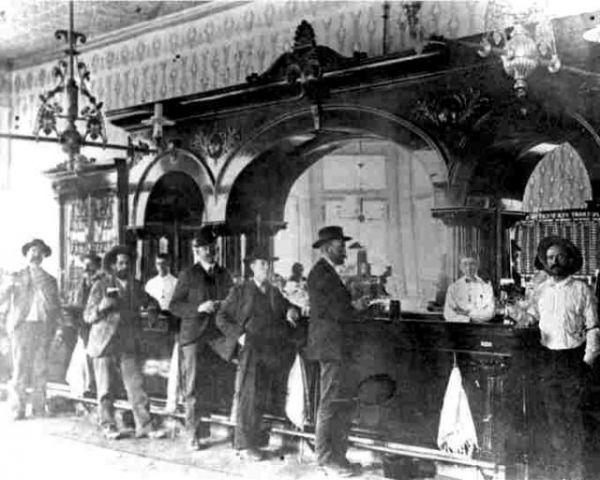
Whatever legends exist, one thing is certain: Jack Daniel had a brilliant mind for marketing. Even as a youngster, Jack understood that if people remembered him, they would remember his whiskey. To that end, he decked himself out in a formal knee-length coat, a vest, a tie, and a wide-brim planter’s hat, and was never caught out of “uniform” again.
Jack also established the Jack Daniel’s Silver Cornet Band—a 10-member outfit solely devoted to promoting his whiskey across the countryside. With uniforms and instruments from the Sears & Roebuck catalog and a specially designed wagon for traveling, Jack made sure the band played every saloon opening, Fourth of July celebration, and political rally around.
But perhaps Jack’s most brilliant decision concerned how to present his whiskey. From the beginning, Jack had been one of the first sellers to stencil his distillery name on his whiskey jugs. Next, he upgraded to round, custom-embossed bottles. But when a glass salesman showed him a prototype square bottle in 1895, Jack realized he’d stumbled upon something unique. The new bottles not only stood out from the crowd, but also had a shape that would prevent them from rolling around and breaking during transport. In addition, the square look reinforced the idea that Jack was a square dealer who put honest work and high standards first.
Whatever effort Jack Daniel put into his marketing, he never let quality slip. In 1904, the distiller decided on a whim to enter his whiskey in the taste competition at the St. Louis World’s Fair. It came as little surprise when he won.
Lucky No. 7
Perhaps Jack’s greatest coup was the name he gave his high-quality product—Old No. 7. Naturally, nobody seems to know why. The official historian at the Jack Daniel Distillery today says it’s the most oft-asked question on factory tours. As you might imagine, many theories have been advanced. Jack had seven girlfriends. Jack believed the number seven was lucky. Jack was honoring a merchant friend who owned seven stores that distributed Jack’s liquor. Jack misplaced a batch of whiskey for seven years and, upon finding it, labeled it “Old No. 7.”
None of these stories, however, makes as much sense as the less-than-sexy explanation from Jack Daniel biographer Peter Krass. Simply put, Jack was originally assigned a district tax assessment number of 7. But when the IRS consolidated districts within Tennessee, they arbitrarily reassigned him the number 16. Jack didn’t want to confuse his loyal consumers, and he certainly didn’t want to bend to the government, so he began labeling his bottles “Old No. 7.” More than 125 years later, this act of defiance still makes his labels stand out.
Jack Without Jill
Jack Daniel never married. Some say it’s because he was married to his work; others say it’s because he never found a girl who measured up to his high standards. Or perhaps it’s just that he was too busy catering to the greater Lynchburg population—throwing elaborate Christmas feasts, hosting exquisite costume parties in his second-story ballroom, and donating money to every church in Moore County.
But by all accounts, Jack was quite a ladies’ man. He was a perfect dance partner, a polite conversationalist, and a fantastic gift-giver. Unfortunately, he also gravitated toward girls young enough to be his daughter (or even granddaughter). Once, Jack even asked for a woman’s hand in marriage, but her father denied him—partly because Jack enjoyed keeping his own legend alive and always hesitated to reveal his true birth date. When Jack proposed, her father made it clear that any man unwilling to disclose his age was “a little too old for such a young girl.”
The Early Bird Gets the Gangrene
Hard as it might be to believe, in the end, the great distiller actually died from getting to work too early. As the story goes, one morning in 1906, Jack arrived at his office before anybody else. He tried to access the company safe, but had a terrible time remembering the code. After a few frustrating minutes, he kicked the safe as hard as he could. He badly bruised his left foot and immediately began to walk with a limp. The limp only grew worse with time, and he later discovered the injury had led to blood poisoning. Then came gangrene, then amputation, and then, five years later, death.
It’s not the happiest ending for the story, or the clearest cut, but it is the best, because it adds to the mystery and mystique of Jack Daniel. As they say, where facts cannot be found, legends fill the empty space—and that’s perfectly fine for the keepers of the company flame. After all, as Jack himself believed, the more memorable his image, the more memorable his whiskey.
The legend of Jack Daniel reaches all the way back to the moment he was born. Unfortunately, nobody knows exactly when that was. Some records show that Jasper Newton “Jack” Daniel came into the world on September 5, 1846. His tombstone, however, says 1850. Strange, because his mother died in 1847.
All of this might not normally matter, but Jack’s birth date is important to his overall legend, which proudly proclaims him “the boy distiller.” So perhaps it’s best we begin when Jack was first introduced to whiskey, which we know was early in life. Leaving home at a young age, Jack struck out on his own with nothing more than a handful of items valued at $9. He ended up at the home of Dan Call, a preacher at a nearby Lutheran church and the owner of a general store. There, Reverend Call also happened to sell whiskey that he distilled himself.
Jack quickly became determined to learn the craft. In fact, many storytellers claim the boy wonder bought the still from Call and began pursuing the business full-time at the ripe age of 16. If that legend is true, then Jack began selling his own Tennessee whiskey only three years later; the famous black labels on the company bottles proudly pronounce, “Established and Registered in 1866.”
In reality, no documents support that myth. Jack may have been a teenage moonshiner, but he didn’t register his business with the federal government until 1875. And by then, Jack would have been the more booze-appropriate age of 29.
The Maker Makes His Mark
Whatever legends exist, one thing is certain: Jack Daniel had a brilliant mind for marketing. Even as a youngster, Jack understood that if people remembered him, they would remember his whiskey. To that end, he decked himself out in a formal knee-length coat, a vest, a tie, and a wide-brim planter’s hat, and was never caught out of “uniform” again.
Jack also established the Jack Daniel’s Silver Cornet Band—a 10-member outfit solely devoted to promoting his whiskey across the countryside. With uniforms and instruments from the Sears & Roebuck catalog and a specially designed wagon for traveling, Jack made sure the band played every saloon opening, Fourth of July celebration, and political rally around.
But perhaps Jack’s most brilliant decision concerned how to present his whiskey. From the beginning, Jack had been one of the first sellers to stencil his distillery name on his whiskey jugs. Next, he upgraded to round, custom-embossed bottles. But when a glass salesman showed him a prototype square bottle in 1895, Jack realized he’d stumbled upon something unique. The new bottles not only stood out from the crowd, but also had a shape that would prevent them from rolling around and breaking during transport. In addition, the square look reinforced the idea that Jack was a square dealer who put honest work and high standards first.
Whatever effort Jack Daniel put into his marketing, he never let quality slip. In 1904, the distiller decided on a whim to enter his whiskey in the taste competition at the St. Louis World’s Fair. It came as little surprise when he won.
Lucky No. 7
Perhaps Jack’s greatest coup was the name he gave his high-quality product—Old No. 7. Naturally, nobody seems to know why. The official historian at the Jack Daniel Distillery today says it’s the most oft-asked question on factory tours. As you might imagine, many theories have been advanced. Jack had seven girlfriends. Jack believed the number seven was lucky. Jack was honoring a merchant friend who owned seven stores that distributed Jack’s liquor. Jack misplaced a batch of whiskey for seven years and, upon finding it, labeled it “Old No. 7.”
None of these stories, however, makes as much sense as the less-than-sexy explanation from Jack Daniel biographer Peter Krass. Simply put, Jack was originally assigned a district tax assessment number of 7. But when the IRS consolidated districts within Tennessee, they arbitrarily reassigned him the number 16. Jack didn’t want to confuse his loyal consumers, and he certainly didn’t want to bend to the government, so he began labeling his bottles “Old No. 7.” More than 125 years later, this act of defiance still makes his labels stand out.
Jack Without Jill
Jack Daniel never married. Some say it’s because he was married to his work; others say it’s because he never found a girl who measured up to his high standards. Or perhaps it’s just that he was too busy catering to the greater Lynchburg population—throwing elaborate Christmas feasts, hosting exquisite costume parties in his second-story ballroom, and donating money to every church in Moore County.
But by all accounts, Jack was quite a ladies’ man. He was a perfect dance partner, a polite conversationalist, and a fantastic gift-giver. Unfortunately, he also gravitated toward girls young enough to be his daughter (or even granddaughter). Once, Jack even asked for a woman’s hand in marriage, but her father denied him—partly because Jack enjoyed keeping his own legend alive and always hesitated to reveal his true birth date. When Jack proposed, her father made it clear that any man unwilling to disclose his age was “a little too old for such a young girl.”
The Early Bird Gets the Gangrene
Hard as it might be to believe, in the end, the great distiller actually died from getting to work too early. As the story goes, one morning in 1906, Jack arrived at his office before anybody else. He tried to access the company safe, but had a terrible time remembering the code. After a few frustrating minutes, he kicked the safe as hard as he could. He badly bruised his left foot and immediately began to walk with a limp. The limp only grew worse with time, and he later discovered the injury had led to blood poisoning. Then came gangrene, then amputation, and then, five years later, death.
It’s not the happiest ending for the story, or the clearest cut, but it is the best, because it adds to the mystery and mystique of Jack Daniel. As they say, where facts cannot be found, legends fill the empty space—and that’s perfectly fine for the keepers of the company flame. After all, as Jack himself believed, the more memorable his image, the more memorable his whiskey.
Saturday, October 24, 2009
Subscribe to:
Posts (Atom)